Many people only think about getting their cars fixed after a wreck and making their insurance calls. But, one of the most crucial steps is learning How to Document Evidence After a Car Accident. Documentation can help establish your rights, make your insurance claim process, and back up your case if it comes to an argument about who was at fault or how much is due.
Incidents happen in a flash and vital information can be forgotten within minutes. Vehicles move, memories fade, and security cameras can be tampered with and may be erased. Having a detailed record right after the accident provides you with better evidence when dealing with insurance companies, repair shops, or attorneys.
Why Is It Important to Document Evidence After a Car Accident?
Evidence paints a picture of what happened before, during and after a collision. A personal statement is important, but with supporting evidence your claim is strengthened.
After an Auto Accident, you are gathering evidence to help answer some critical questions:
- Who was involved?
- Where and when did the accident happen?
- Why did the two vehicles impact?
- What damage occurred?
- What injuries resulted?
- What were the monetary losses incurred?
An insurance company may use records, photos, reports and medical documentation more than just a person’s memory. An effective evidence file can minimize disputes and smooth out the claims process.
Take Photos of the Accident Scene
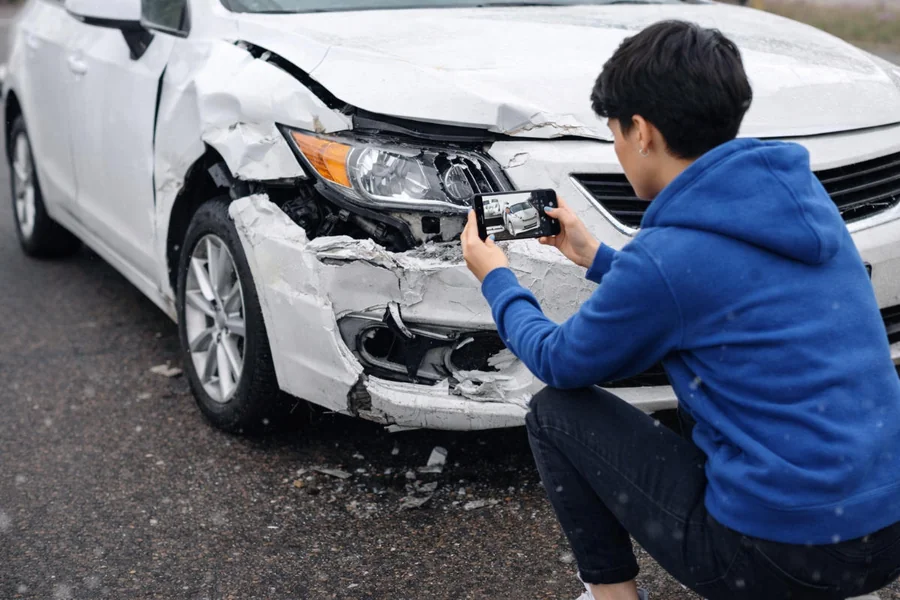
Taking detailed photos is one of the first steps of How to Document Evidence After a Car Accident. Your cell phone can take essential data that might not be available afterward.
- Take pictures of:
- All vehicles involved
- The multiple angles of damage to the vehicle.
- License plates
- Road conditions
- Signs and signals for traffic use.
- Skid marks
- Broken vehicle parts
- Debris on the road
- Light and weather conditions
- Sites or cameras that are in the vicinity.
Avoid just taking photos of the damage. A wide angle photograph of the entire accident scene can be useful to explain the positions of vehicles and road conditions.
For instance, if you view a close up of a bumper, you will see the damage, but if you zoom in a wider shot will show if a vehicle was stopped at an intersection or pushed to the other lane.
Record Videos of the Accident Scene
While photos give a lot of information, video offers even more. Slowly record the entire area around the accident.
The following elements should be incorporated into your video:
- The location of each vehicle
- Traffic movement
- Road layout
- Weather conditions
- Visible damage
- Your explanation of what happened:
As you are recording, you can describe some basic information, like the date, time, location, and what you saw. This leaves you with a time-stamped record, when things are fresh in your mind.
Collect Information From Drivers and Witnesses
One of the other critical aspects of How to Document Evidence After a Car Accident is to gather contact details.
Get details from:
- Other drivers
- Passengers
- Pedestrians
- Nearby witnesses
- Important information includes:
- Full name
- Phone number
- Email address
- Driver’s license information
- Insurance information
- Vehicle details
Witnesses will be able to give their own accounts of what occurred. Their statements could be of benefit if there are conflicting statements from the drivers.
Obtain the Police Report
One of the essential parts of the accident documentation is a police report. If responding officers arrive at the scene, gather details of:
- Officer name
- Badge number
- Police department
- Report number
To obtain a copy, please ask the staff member.
The police report can contain information on the scene of the accident, extraction of statements from both drivers and witnesses, and notes taken by the officer on the scene.
The police report should not be the only source of information, however. You can fill in information from your own photographs, notes and records that is not mentioned in the official report.
Write Down Your Own Accident Account
Complete a personal timeline of events following an accident. Things can be forgotten over time and it is important to write down your experience at the time.
Include:
- Time and date of the incident
- Exact location
- Weather conditions
- Road conditions
- Direction in which you were headed
- How the person acted prior to the impact.The actions of the person before impact.
- Where vehicles stopped
- Discussions with other drivers
What did you do after the accident?What happened after the accident?
Write your account focusing on facts. Don’t assume who might have been to blame or make a declaration. It’s better to have a clear timeline rather than emotional explanations. ponsible. A clear timeline is more useful than emotional explanations.
Document Your Injuries and Medical Treatment
An injury sustained due to a car accident collision doesn’t always show up right away. Other symptoms occur hours or days later.
To properly document injuries:
- Document any injuries that are visible.
- Maintain the records of medical appointments.
- Save prescriptions and bills
- Record symptoms daily
- Make note of pain or limitations
Make an injury log containing:
- Date
- Symptoms
- Pain level
- Medical visits
Doing things that are impossible.Things that can’t be done.
Medical documentation is used to tie your injuries to the accident and demonstrates the impact of the accident on your life.
Keep Records of Vehicle Damage and Repairs
Vehicle damage documentation is another essential part of How to Document Evidence After a Car Accident.
Save:
- Repair estimates
- Mechanic reports
- Towing receipts
- Rental car expenses
- Repair invoices
- Photos before and after repairs
Take photographs before repairs begin. Hidden damage may be discovered later, so keeping early evidence helps create a complete repair history.
Track Financial Losses
A car accident can create many unexpected expenses. Keep records of every cost related to the crash.
Examples include:
- Medical bills
- Transportation expenses
- Lost wages
- Vehicle repairs
- Rental costs
- Medication expenses
- Other accident-related payments
Store receipts, invoices, and payment records in one place.
Organize Your Evidence Properly
Collecting evidence is only useful if you can find it easily. Create a system for organizing your files.
You can create folders such as:
Accident Scene
- Photos
- Videos
- Witness details
Medical Records
- Bills
- Doctor notes
- Treatment history
Insurance
- Claim documents
- Emails
- Phone call notes
Vehicle Damage
- Repair estimates
- Receipts
- Inspection reports
Also create a timeline showing important events from the accident date until the claim process ends. A clear timeline helps anyone reviewing your case understand what happened.
Common Mistakes When Documenting Accident Evidence
Many people weaken their claims by making simple documentation mistakes.
Avoid these errors:
Waiting Too Long
Evidence becomes harder to collect as time passes. Take photos and write notes as soon as possible.
Taking Too Few Photos
A few pictures may not show the complete situation. Capture multiple angles and include the surrounding area.
Throwing Away Damaged Items
Keep damaged personal items, vehicle parts, or other physical evidence until your claim is resolved.
Not Backing Up Files
Phones can be lost or damaged. Save copies of photos, videos, and documents in secure storage.
Posting Details Online
Avoid sharing accident details or claim information publicly on social media. Insurance companies may review public posts.
Final Thoughts
Knowing How to Document Evidence After a Car Accident can make a major difference in protecting your claim. Strong documentation includes photos, videos, witness information, police reports, medical records, repair documents, and financial records.
The key is to start early and stay organized. A complete accident record tells the full story and provides valuable support when dealing with insurance companies or legal professionals. Proper documentation does not change what happened, but it helps ensure your side of the story is clearly supported by facts.