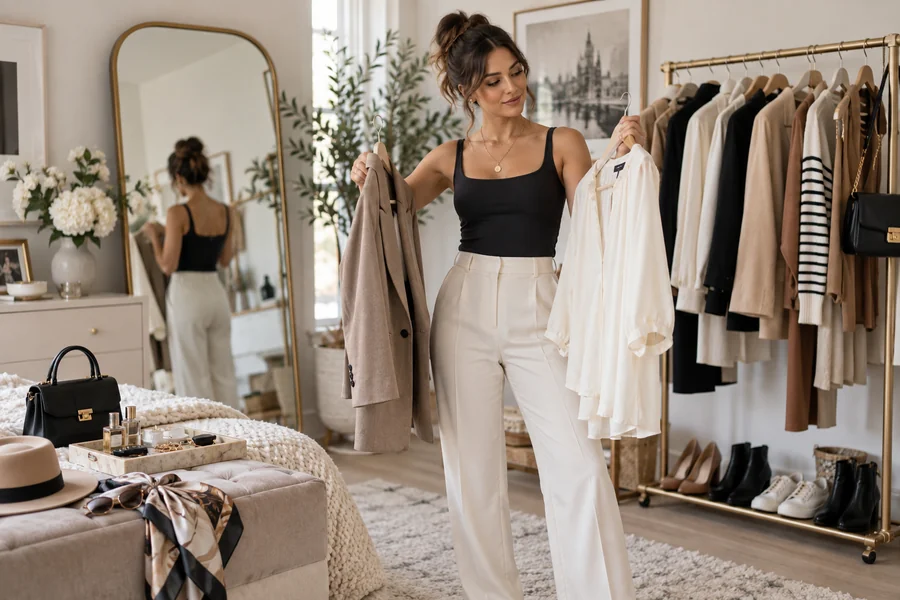
Fashion is more than just about the trends; it is also about purchasing a costly clothing. It’s also a method to portray your personality, lifestyle, and confidence. Knowing how to design a personal fashion can make the whole dressing up a breeze and make you feel comfortable in your clothes.
Don’t dress like everyone else – dress like yourself. Others opt for simple and classic attire, while others favor bold hues, inventive prints or contemporary street fashion. Dressing is a matter of personal choice and there is no one right way.
The objective is to create an outfit that feels authentic, practical and true to you. Anyone can learn to have their own personal style with some observation and experimentation.
What Is Personal Fashion Style?
Personal fashion style is the manner in which you generally pick and mix your clothes, shoes, jewelry, colors and designs.
It’s an expression of your character and can be a way people identify you.
For instance, a person might have a tendency to dress in neutral hues, slim-fitting trousers, plain shirts and leather shoes. Another person might like to wear clothes that are too big, have wide shoes, a t-shirt with graphics and colored accessories.
These two strategies can be very effective personal styles.
Since personal style is not necessarily same style every day, it doesn’t necessarily mean that you should wear a particular outfits. It just implies that your outfits typically have a number of qualities in common that reveal your tastes.
How to Create a Personal Fashion Style
It takes time to develop a style of your own. You don’t have to replace all your clothing all at once.
Rather, first know what things you already like to wear.
First, inspect your existing collection of clothes.
Consider your most frequently worn clothing items. These pieces can tell you a great deal about your innate preferences.
Ask yourself:
What types of clothing make me feel good?
Which colors do I favour the most?
Is my clothing size fitted or loose?
Which outfits do I prefer: casual, formal, sporty or classic?
What kinds of clothes don’t seem to go out of style?
Patterns might be noticeable.
Maybe you always wear black jeans, white T-shirts, sneakers, and light jackets. This might indicate a casual style that is simple.
Knowing what you’re doing now is helpful.
Find Fashion Inspiration
Getting ideas of fashion can enable you to uncover designs that you may not have thought of.
Try to check out fashion magazines, social media, street fashion, movies, fashion websites and even people you come across in everyday life.
Pick out clothes images that catch your eye.
Do not be concerned about brand or price initially. Pay attention to the overall appearance.
Take a few pictures, and then compare them.
Look for repeating elements like:
- Neutral colors
- Denim
- Oversized jackets
- Minimalist outfits
- Vintage clothing
- Sneakers
- Tailored trousers
- Bold accessories
The repeating elements give a hint at the natural style .
Create a Fashion Mood Board
A mood board can be used to structure your concepts.
It can be made digital, or printed pictures can be used.
Include outfits, colors, accessories, shoes, patterns and fabrics denoting the desired style.
Once the board is created, look for the best themes.
You could have the beige coats, white shirts, blue jeans, black trousers, loafers and simple bags as some of your mood board elements, for instance.
That may indicate that a minimalist style is best for you.
A fashion mood board is a great tool to help you define your direction before going out to buy new clothes.
Identify Your Favorite Colors
Colour is also a significant part of the individual’s style.
Some people prefer to wear bright colors, while others prefer to wear neutral colors.
Begin by picking a main color, and then choose a few colors that complement it.
The following are some ideas of what a simple wardrobe may consist of:
| Category | Example Colors |
| Base colors | Black, white, navy, beige |
| Secondary colors | Brown, gray, olive |
| Accent colors | Red, blue, green, yellow |
You do not have to follow strict color rules.
Strict colors rules do not need to be adhered to.
But a simple color scheme allows it to be easier to mix various pieces.
It also means that you will be able to avoid purchasing clothing that doesn’t match with any other article you have in your wardrobe.
Understand Your Lifestyle
The personal style that is successful should match your everyday life.
Think of someone who is working in a professional office but who is purchasing a lot of party wear. What may appear to be a great look can be impractical.
Consider your main activities.
- You might need clothes for:
- Work
- University
- Meetings
- Casual outings
- Travel
- Exercise
- Special events
- Social occasions
Individuals who work at home may require comfortable casual wear, whereas those who attend business meetings regularly may require more formal items.
When style and fashion go hand in hand, it becomes much easier.
Find Clothes That Fit Well
Fit is a key element to look at when determining the look of an outfit.
Sometimes even pricey attire can be unflattering if they don’t fit.
Consider proportion, length of sleeves, waist, shoulder and trouser fit.
Experiment with various cuts until you find ones that are comfortable.
For instance, you could opt for:
- Straight-leg jeans as opposed to skinny jeans.
- Oversized shirts in lieu of fitted shirts
- Short jackets rather than longer ones.Short jackets rather than long jackets.
- Tight pants rather than loose pants.
If you are familiar with your preferred cuts, you’ll find future shopping easier and quicker.
Build Your Wardrobe Around Basics
Basic clothing creates the foundation of a flexible wardrobe.
These pieces are usually simple and easy to combine.
Common wardrobe basics include:
- Plain T-shirts
- White or neutral shirts
- Well-fitting jeans
- Black trousers
- Simple sweaters
- Comfortable sneakers
- A versatile jacket
- A neutral coat
- Everyday shoes
You do not need every item on this list.
Choose basics that match your lifestyle.
Once you have a strong foundation, you can add more creative items such as statement jackets, unusual shoes, colorful shirts, or accessories.
Experiment With Different Outfits
You cannot fully discover your style without experimenting.
Try combining clothing in new ways.
Wear pieces you normally would not put together. Add a different jacket, change your shoes, or experiment with layering.
You may discover unexpected combinations that work very well.
Taking outfit photos can also help.
Sometimes an outfit looks different in a photograph than it does in the mirror. Saving pictures allows you to compare combinations and identify your favorites.
Over time, you will learn which outfits consistently make you feel confident.
Use Accessories to Show Personality
Accessories can transform even a simple outfit.
A basic shirt and jeans can look completely different depending on the accessories you choose.
Consider using:
- Watches
- Sunglasses
- Belts
- Bags
- Jewelry
- Hats
- Scarves
- Shoes
You do not need many accessories.
One or two carefully selected pieces are often enough.
Accessories are particularly useful if you prefer simple clothing but still want your outfits to feel distinctive.
Do Not Follow Every Fashion Trend
Fashion trends can provide inspiration, but you do not need to follow all of them.
Some trends may suit your personality, while others may feel uncomfortable or impractical.
Before buying a trendy item, ask yourself whether you would wear it even after the trend disappears.
If the answer is yes, it may be worth purchasing.
Personal style becomes stronger when you choose fashion intentionally instead of constantly copying whatever is currently popular.
Buy Clothes More Carefully
Developing personal style can also reduce unnecessary shopping.
Before purchasing something, consider whether it works with your existing wardrobe.
Ask yourself:
- Does this match my personal style?
- Can I wear it with at least three items I already own?
- Is it comfortable?
- Will I actually wear it regularly?
- Does it fit my lifestyle?
These simple questions can prevent impulse purchases.
Buying fewer but more useful pieces often creates a stronger wardrobe.
Create a Signature Element
Many people with recognizable styles have one or two elements they wear regularly.
This could be a particular type of jacket, jewelry, shoes, color, hairstyle, glasses, or accessory.
For example, someone might regularly wear white sneakers and neutral clothing.
Another person might become known for colorful jackets.
A signature element does not need to be dramatic. It simply provides consistency and personality.
Let Your Style Change Over Time
Personal style does not remain exactly the same forever.
Your lifestyle, career, interests, age, and preferences may change.
Your wardrobe should be able to change with you.
Something you loved five years ago may no longer feel appropriate today.
That is normal.
Instead of forcing yourself to maintain one specific image, allow your style to develop naturally.
The best personal style feels authentic to your current life.
Common Mistakes When Developing Personal Style
One common mistake is copying another person’s entire wardrobe.
Inspiration is helpful, but their lifestyle, preferences, and body proportions may be different from yours.
Another mistake is buying too many clothes before understanding your style.
Experiment with what you already own first.
You should also avoid keeping uncomfortable clothing simply because it looks fashionable.
If you constantly adjust an outfit or feel uncomfortable while wearing it, it probably does not belong in your ideal wardrobe.
Final Thoughts
Learning how to create a personal fashion style is mainly about understanding yourself. Start by looking at the clothes you already enjoy, finding inspiration, choosing useful colors, and identifying outfits that suit your lifestyle.
Build your wardrobe slowly rather than trying to change everything at once.
Experiment with different combinations and pay attention to what makes you feel comfortable and confident.
Fashion trends will continue to change, but personal style is much more lasting. When your wardrobe reflects your personality and everyday needs, getting dressed becomes simpler and more enjoyable.
1 thought on “How to Create a Personal Fashion Style”